

For business owners and facility managers in Bolingbrook, the cleanliness of a workspace is often viewed through a lens of aesthetics and basic maintenance. A tidy office creates a good impression for visitors and clients. Yet, a deeper, more critical perspective links the standard of cleaning directly to the health and well-being of the people who spend eight or more hours there every day. The connection between a professionally cleaned environment and reduced employee illness is not just theoretical; it’s a documented factor in productivity, morale, and overall operational continuity.
When cleaning is treated as a simple custodial task, high-touch surfaces, shared equipment, and air quality can become silent vectors for germs. A rigorous, systematic approach is required to disrupt the chain of infection effectively. This is where the decision of hiring professional commercial cleaners in Bolingbrook moves from a routine operational expense to a foundational component of a corporate health strategy. Professional teams bring more than supplies; they bring validated processes, specialized equipment, and a focus on health outcomes that generic cleaning cannot match.
This article examines the specific ways a professional commercial cleaning partnership actively safeguards employee health. We will explore the science behind targeted disinfection, the importance of indoor air quality management, and how a consistently clean environment contributes to a healthier, more resilient workforce.
The Link Between Clean Workspaces and Reduced Illness Transmission
The modern office is a hub of constant interaction. Door handles, elevator buttons, shared kitchen appliances, conference room tables, and computer peripherals are touched by dozens of people daily. Research consistently shows that viruses and bacteria can survive on these surfaces for hours, and sometimes days, facilitating rapid workplace transmission of influenza, common colds, and gastrointestinal illnesses.
Professional cleaning services understand this epidemiology. Their protocols are designed to interrupt this cycle not just visually, but microbiologically. Instead of a generalized wiping down, they implement targeted disinfection of high-touch points using EPA-registered hospital-grade disinfectants proven to eliminate a broad spectrum of pathogens. The frequency and methodology are guided by traffic patterns and risk, not a one-size-fits-all schedule.
The result is a tangible reduction in cross-contamination. When employees fall ill less often, absenteeism drops. The financial impact is significant: the Centers for Disease Control and Prevention (CDC) estimates that productivity losses linked to absenteeism cost employers billions annually. Investing in a professional cleaning regimen is, therefore, a direct investment in workforce stability and productivity. Partnering with experienced Commercial Cleaners ensures this protocol is executed with precision and consistency, turning your facility into a less hospitable environment for germs.
Beyond Surface Cleaning: Professional Attention to Indoor Air Quality
Employee health is impacted as much by what they breathe as what they touch. Indoor air quality (IAQ) is a major, yet often overlooked, component of workplace wellness. Dust, pollen, mold spores, and volatile organic compounds (VOCs) from furnishings and cleaning products can accumulate, exacerbating allergies, asthma, and leading to symptoms like headaches and fatigue—often called “sick building syndrome.”
Professional commercial cleaners address IAQ at its source. Their services extend far beyond vacuuming carpets. Key practices include:
High-Efficiency Particulate Air (HEPA) Filtration Vacuuming
Standard vacuums often recirculate fine dust back into the air. Professional-grade HEPA filtration vacuums capture over 99.97% of particles as small as 0.3 microns, dramatically reducing airborne allergens. This is critical for carpeted areas and upholstered furniture.
Regular HVAC Vent Cleaning
Dust and debris accumulate in air vents, becoming a reservoir for contaminants redistributed throughout the building. Professionals clean vent grilles and, in coordination with HVAC specialists, can ensure ductwork is maintained, promoting cleaner airflow.
Microfiber Technology and Chemical Management
Microfiber cloths and mops trap and remove dust and microbes more effectively than traditional cotton, preventing them from becoming airborne. Furthermore, professional cleaners select cleaning agents with lower VOCs and ensure proper dilution and rinsing to minimize chemical residues that can off-gas and affect air quality.
The Role of Specialized Equipment and Trained Personnel
The gap between a standard clean and a health-focused clean is often defined by equipment and expertise. In-house custodial staff or a less-specialized service may lack access to—or training on—the tools that make a definitive difference.
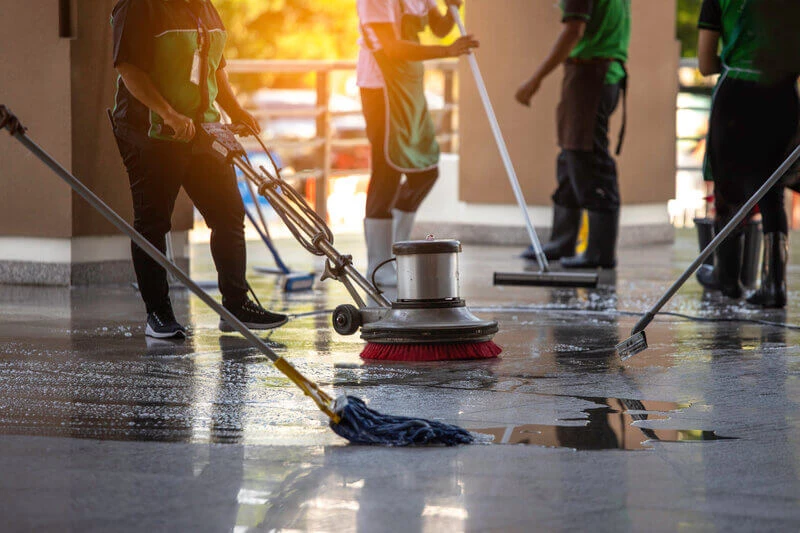
Professional commercial cleaning companies invest in industrial-grade equipment. This includes rotary floor scrubbers that extract deeply embedded grime, electrostatic sprayers for uniform disinfectant application over large areas, and high-reach equipment for thorough dusting of ceilings and light fixtures. These tools achieve a level of cleanliness that manual methods simply cannot.
More important than the equipment, however, is the trained operator. Professional cleaners are trained on the latest protocols, chemical safety, and the specific sequences required for effective sanitization versus simple cleaning. They understand dwell times—the critical contact period a disinfectant must remain wet on a surface to be effective—a detail often missed in rushed cleaning jobs. This combination of advanced tools and certified training transforms cleaning from a chore into a science, ensuring every square foot of your Bolingbrook office contributes to a healthier environment.
Creating a Culture of Health and Safety
A visibly, consistently clean workplace sends a powerful message to employees: their well-being is valued. This psychological impact should not be underestimated. When staff work in an environment that is clearly cared for, it reinforces a shared culture of health and safety. Employees are more likely to adopt and respect clean desk policies, properly dispose of waste, and participate in maintaining communal areas.
Professional Commercial Cleaning Services provide the reliable foundation for this culture. Their consistent performance removes the uncertainty and variability that can plague in-house or ad-hoc cleaning arrangements. Facility managers can schedule deep cleaning during off-hours with confidence, knowing the job will be completed to a verified standard. This reliability allows management to focus on their core business operations, secure in the knowledge that the foundational aspect of workplace health is being handled by experts.
This proactive stance on cleanliness also demonstrates compliance with a duty of care, potentially mitigating liability. In a post-pandemic landscape, the standard for workplace hygiene has been permanently elevated. Businesses that proactively partner with professional cleaners position themselves as responsible employers, which can aid in talent recruitment and retention.
Cost Analysis: Prevention Versus Reaction
Some businesses view professional cleaning as a cost to be minimized. A more strategic view recognizes it as a cost-effective prevention tool. The direct and indirect costs of employee illness are substantial. They include:
- Paid sick leave for the absent employee.
- Lost productivity from the absent employee and often from covering colleagues.
- Increased healthcare claims and potential insurance premiums.
- Reduced output and potential delays in projects or client service.
The investment in a professional cleaning contract pales in comparison to the cumulative cost of a widespread office illness. Furthermore, professional cleaners extend the life of assets—carpets, flooring, furniture, and fixtures—by using proper techniques and products, delaying costly capital replacements. When viewed through this lens, hiring professional commercial cleaners in Bolingbrook is not an overhead expense but a calculated investment in human capital and asset preservation with a measurable return.
Frequently Asked Questions
How do professional cleaners reduce allergens in the office?
Professional cleaners reduce allergens through a multi-pronged approach. They use HEPA-filter vacuums that trap microscopic particles like pollen, dust mites, and pet dander instead of blowing them back into the air. They employ damp-dusting techniques with microfiber cloths to capture and remove dust from surfaces. Regular deep cleaning of upholstery, blinds, and hard-to-reach areas prevents allergen buildup, providing significant relief for employees with allergies or asthma.
What is the difference between cleaning, sanitizing, and disinfecting?
Cleaning removes visible dirt, debris, and some germs from surfaces. Sanitizing reduces the number of germs to a level considered safe by public health standards. Disinfecting uses chemicals to kill nearly all germs listed on the product label. Professional commercial cleaners know when each process is required and use EPA-registered products with correct dwell times to ensure true disinfection on high-touch surfaces, going far beyond cosmetic cleaning.
Can professional cleaning help with employee morale?
Absolutely. A clean, odor-free, and organized workspace directly impacts employee perception and morale. It demonstrates that management invests in their daily environment and cares about their well-being. This can lead to increased job satisfaction, pride in the workplace, and a more positive overall company culture, which contributes to lower turnover and higher engagement.
Are the cleaning products used by professionals safe for occupied offices?
Reputable professional cleaning companies prioritize green cleaning solutions and employee safety. They use hospital-grade disinfectants that are effective yet break down quickly, and they often employ products with lower VOCs to improve indoor air quality. Application is typically scheduled during off-hours, and any products used during the day are chosen for their safety profile in occupied spaces.
How often should a commercial office in Bolingbrook be professionally cleaned?
Frequency depends on office size, foot traffic, and type of business. A standard recommendation for most offices includes daily trash removal and restroom cleaning, nightly vacuuming and surface disinfection, and weekly deep cleaning of kitchens and common areas. A professional service will conduct an assessment to recommend a customized schedule that balances health protection with operational needs and budget.
Do professional cleaners handle specialized areas like server rooms or labs?
Yes, most professional commercial cleaning companies offer specialized services for sensitive environments. This includes using static-control methods for server rooms, specialized disinfectants for healthcare or lab settings, and industry-specific protocols. It’s essential to discuss these unique needs during the initial consultation to ensure the provider has the requisite expertise and equipment.
Conclusion
The decision to hire professional commercial cleaners in Bolingbrook, IL, transcends the simple goal of a presentable office. It is a strategic, data-backed investment in human capital. By implementing systematic disinfection protocols, improving indoor air quality, and utilizing advanced equipment and training, professional services directly combat the primary causes of workplace illness. This leads to a measurable decline in absenteeism, an increase in productivity, and a stronger, more resilient workforce.
Ultimately, a partnership with a professional cleaning provider establishes a foundation of health and safety upon which every other business function relies. It creates an environment where employees feel valued and protected, fostering a positive culture and reinforcing your organization’s commitment to its most important asset: its people. In an era where health consciousness is paramount, this proactive approach is not just a best practice; it is a clear marker of a responsible and forward-thinking business.