

A reliable power source is the lifeblood of any professional workshop. Whether you’re a woodworker, mechanic, welder, or custom fabricator, an unexpected outage or a remote job site can bring production to a grinding halt. Traditional gas generators offer a solution, but they come with significant drawbacks: noise, fumes, maintenance, and the inability to use them safely indoors. The modern professional needs a cleaner, smarter, and more versatile energy partner.
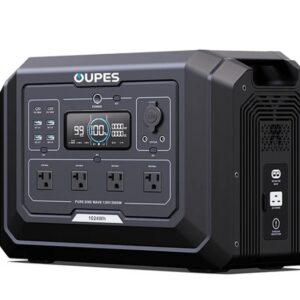
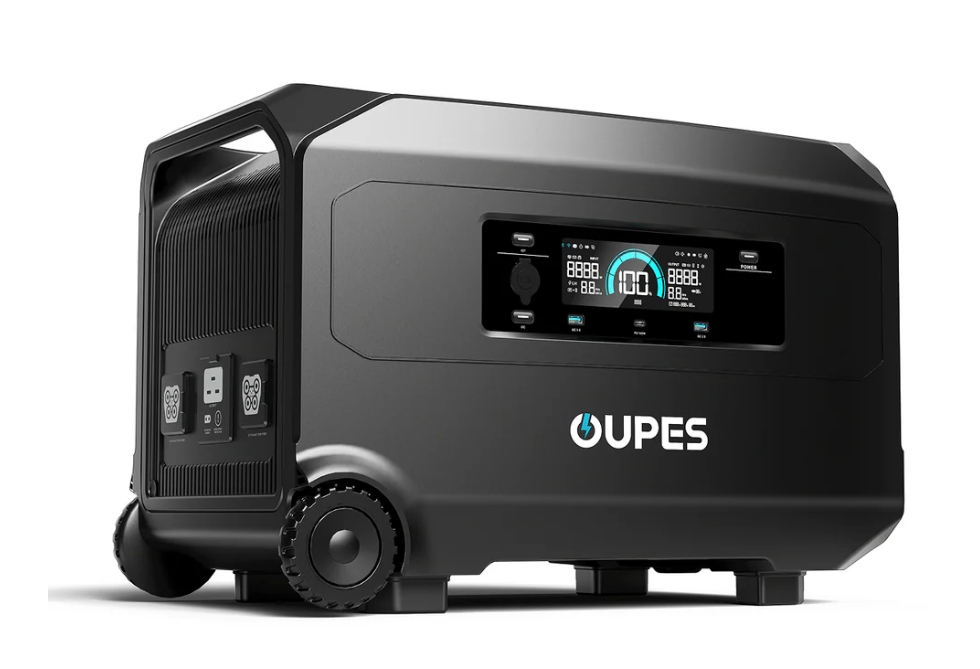
This is where high-capacity portable power stations come into play, and models like the OUPES Guardian 6000 V2 are redefining expectations. These units are not just for charging phones on a camping trip; they are engineered to deliver the sustained, high-wattage output required by demanding professional equipment. By moving beyond the limitations of fuel, they offer a silent, emission-free way to keep your most critical tools operational.
This article will explore the specific capabilities that make a power station like this a viable asset for a workshop. We’ll examine its power output, battery technology, and practical applications for common tools, providing a clear framework for integrating robust portable power into your professional workflow.
Understanding the Power Requirements of a Professional Workshop
Before investing in any power solution, you must first audit your workshop’s energy demands. Professional-grade tools consume significantly more power than standard household appliances, and their startup surges—known as surge or peak power—can be two to three times their running wattage. A tool that runs on 1500 watts might require a 4500-watt surge to start its motor.
Common high-drain workshop equipment includes:
- Stationary Power Tools: Table saws, band saws, jointers, and planers often have motors ranging from 1,500 to 3,000 running watts.
- Welding Equipment: A 120V MIG welder can draw between 1,800 and 2,500 watts during operation.
- Air Compressors: These are notorious for high startup surges. A 1-horsepower compressor may run on 1,000 watts but surge to over 3,000 watts.
- Dust Collection Systems: Central dust collectors are essential for air quality but can run continuously at 1,000 to 2,000 watts.
- Battery Charging Stations: Simultaneously charging multiple 18V or 20V battery packs for cordless tools requires a steady, clean power supply.
A power station must not only meet the continuous wattage needs of these tools but also handle their startup surges without tripping a safety cutoff. This dual requirement separates consumer-grade power banks from professional-grade units.
Key Features of a Workshop-Ready Power Station
Not all portable power stations are created equal. To be a true asset in a professional setting, a unit must excel in several critical areas. The core specifications determine whether it can handle your workload or will fall short when you need it most.
High Continuous and Surge Power Output
The most vital specification is the unit’s wattage rating. A professional workshop demands a continuous output of at least 3,000 watts, with a surge capacity approaching 6,000 watts or more. This range covers the startup of most single-motor tools like table saws and mid-sized air compressors. The ability to deliver this power cleanly (in a pure sine wave) is non-negotiable, as it protects sensitive electronics in variable-speed tools, battery chargers, and diagnostic equipment.
Massive Expandable Capacity
Wattage tells you what you can run; capacity (measured in watt-hours, or Wh) tells you for how long. A station with a 6,000Wh capacity can theoretically deliver 6,000 watts for one hour, 1,000 watts for six hours, and so on. For workshop use, where tools may run intermittently throughout a day, a high base capacity is essential. Furthermore, the ability to expand capacity by adding external battery packs is a game-changer, allowing you to customize your runtime for multi-day projects or extended outages.
Rapid, Multi-Faceted Recharging
Downtime is lost revenue. A professional power station must recharge quickly. Look for units that support fast AC wall charging, high-input solar charging (500W+), and even dual-source charging (solar + AC simultaneously). The ability to reach an 80% charge in two hours or less from an outlet means you can quickly top up between jobs. For off-grid workshops or job sites, compatibility with high-wattage solar panels turns sunlight into a viable primary fuel source.
Durable Build and Professional Portability
A workshop is a tough environment with dust, vibrations, and occasional bumps. The enclosure should be robust, with adequate cooling systems for sustained high-load operation. While “portable” is relative for a 60+ lb unit, integrated heavy-duty wheels and a telescoping handle are mandatory for moving it from a service vehicle to a job site or around a large shop floor.
Practical Applications in the Workshop Environment
With the right specifications, a high-capacity power station transitions from a backup device to an active part of your operational plan.
Primary Backup Power: During a grid outage, the station can keep your essential tools and shop lights running, allowing you to meet deadlines without interruption. It can power critical equipment like sump pumps or freezers if your workshop doubles as a home garage. For comprehensive protection, it serves as the cornerstone for broader home backup power solutions, ensuring both your livelihood and your home remain powered.
Mobile and Off-Grid Operations: For contractors, automotive detailers, or tradespeople working on-site where grid power is unavailable or unreliable, the station becomes a mobile power hub. It can run saws, sanders, job site lights, and fans directly from a truck bed or trailer.
Supplemental Peak Power: Even with grid power, some older workshops have circuits that can’t handle a dust collector and a table saw running simultaneously. A power station can shoulder the load of one tool, preventing breaker trips and allowing you to use your full suite of equipment without expensive electrical upgrades.
Clean Power for Sensitive Tasks: When finishing fine woodworking or performing detailed electronic repairs, consistent voltage is crucial. A pure sine wave inverter provides cleaner electricity than the grid in some areas, preventing tool motor hum and ensuring the safe operation of precision devices.
Integrating the Power Station into Your Workflow
Successful integration requires planning. Start by creating a simple spreadsheet listing your essential tools, their running watts, and estimated daily runtime. This will give you a realistic view of your daily energy consumption.
Designate a central, well-ventilated location in your shop for the station. Use high-quality, appropriately gauged extension cords for high-wattage tools. Implement a charging routine—plugging the station into AC power whenever it’s not in use ensures it’s always ready. For solar integration, position panels for maximum sun exposure, considering a permanent roof mount or a portable foldable array for job sites.
Treat the power station as a core piece of shop equipment. Schedule periodic checks of its state of charge and firmware updates if applicable. By making it part of your standard setup and breakdown process, you ensure its power is instantly available when an opportunity or a challenge arises.
Frequently Asked Questions
What’s the difference between running watts and surge watts?
Running watts (or continuous watts) is the constant power a device needs to operate. Surge watts (or peak watts) is the extra burst of power required to start a motor-driven device, often lasting a few seconds. A power station must have a surge rating high enough to cover your tool’s startup needs.
Can I run a 240V welder or industrial machine?
Most standalone portable power stations output standard 120V AC. To run a 240V tool, you typically need two identical stations configured in tandem (if the model supports it) or a dedicated 240V inverter generator. Always check your tool’s voltage requirements against the station’s output specifications.
How long will it last running my table saw?
You need to calculate the energy consumption. If your table saw runs on 1,800 watts and you have a 6,000Wh power station, you’d get roughly 3.3 hours of continuous runtime (6000Wh / 1800W = 3.33 hours). In practice, runtime is less due to efficiency loss and is used in bursts, extending practical use.
Is it safe to use a power station indoors?
Yes, absolutely. Unlike gas generators, which produce deadly carbon monoxide, battery-powered stations produce zero emissions. They are safe for indoor use in well-ventilated areas. The primary safety consideration is ensuring the unit itself has adequate airflow to cool during high-load operation.
How does solar charging work for a workshop?
You connect compatible solar panels to the station’s solar charge input. The panels convert sunlight to DC electricity, which the station’s charge controller manages to safely charge the internal battery. For a workshop, you can use panels mounted on the shop roof to provide a constant trickle charge, or use portable panels to recharge the station at remote job sites.
Can I expand the battery capacity later?
Many high-end professional models offer expansion capabilities. You can add external battery modules that plug into the main unit, often doubling or tripling the total usable capacity. This modularity is a key feature for scaling your power solution as your needs grow.
Conclusion
For the modern professional, workshop power is a strategic concern, not just a utility. The limitations of the traditional electrical grid and the downsides of fuel-dependent generators create a clear need for a smarter alternative. A high-capacity portable power station, built with professional demands in mind, provides that solution. It delivers silent, clean, and instantly available electricity to keep your most valuable tools running, whether you’re facing a blackout, working in a remote location, or simply pushing the limits of your existing shop’s circuits.
The investment transcends mere backup; it is an investment in uninterrupted productivity, operational flexibility, and professional resilience. By carefully matching a unit’s output, capacity, and features to your specific tool inventory and workflow, you can effectively future-proof your workshop against power-related disruptions. In doing so, you secure not just your equipment’s operation, but the momentum of your craft and business.